Six months in microgravity. What a heart study suggests about Mars.
A study of 13 astronauts supports orbital exercise routines—but a simulated gravity test is not a Mars mission.
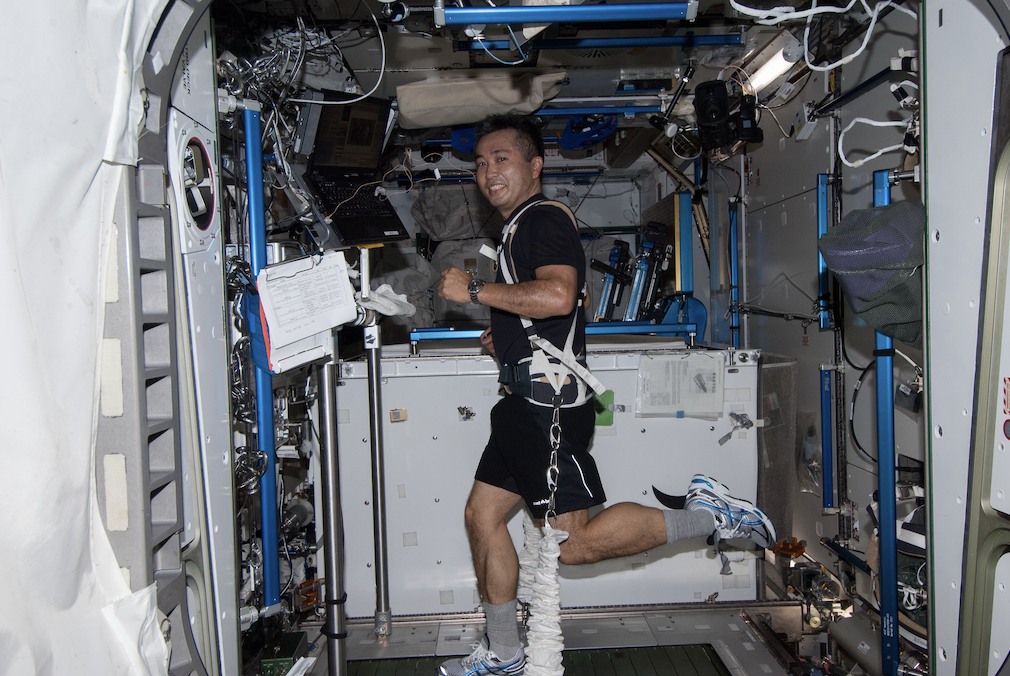
Astronauts can spend months floating, but their hearts still have to work when gravity returns. A study of 13 people on roughly six-month International Space Station missions found encouraging signs that sustained exercise can help preserve that capacity, including during a postflight test designed to approximate the pull of Mars.
The result supports the exercise countermeasures used in orbit. It does not mean a crew has already passed a medical test on Mars, or that exercise alone removes the risks of a multiyear journey.
What changed in the first weeks
Researchers tracked heart function before, during and after the missions using ultrasound. In weightlessness, blood and other fluids shift toward the upper body, changing the conditions under which the heart fills and pumps.
During the first two weeks in space, measurements showed reductions in cardiac filling and stroke volume—the amount of blood pushed out with each beat. Over time, those measures moved back toward preflight levels.
The astronauts followed an intensive routine of up to about two hours of daily exercise. It combined roughly 30 to 45 minutes of endurance activity with 60 to 75 minutes of resistance work. This was not a finding that a few occasional stretches offset months in microgravity.
A gym that has to replace body weight
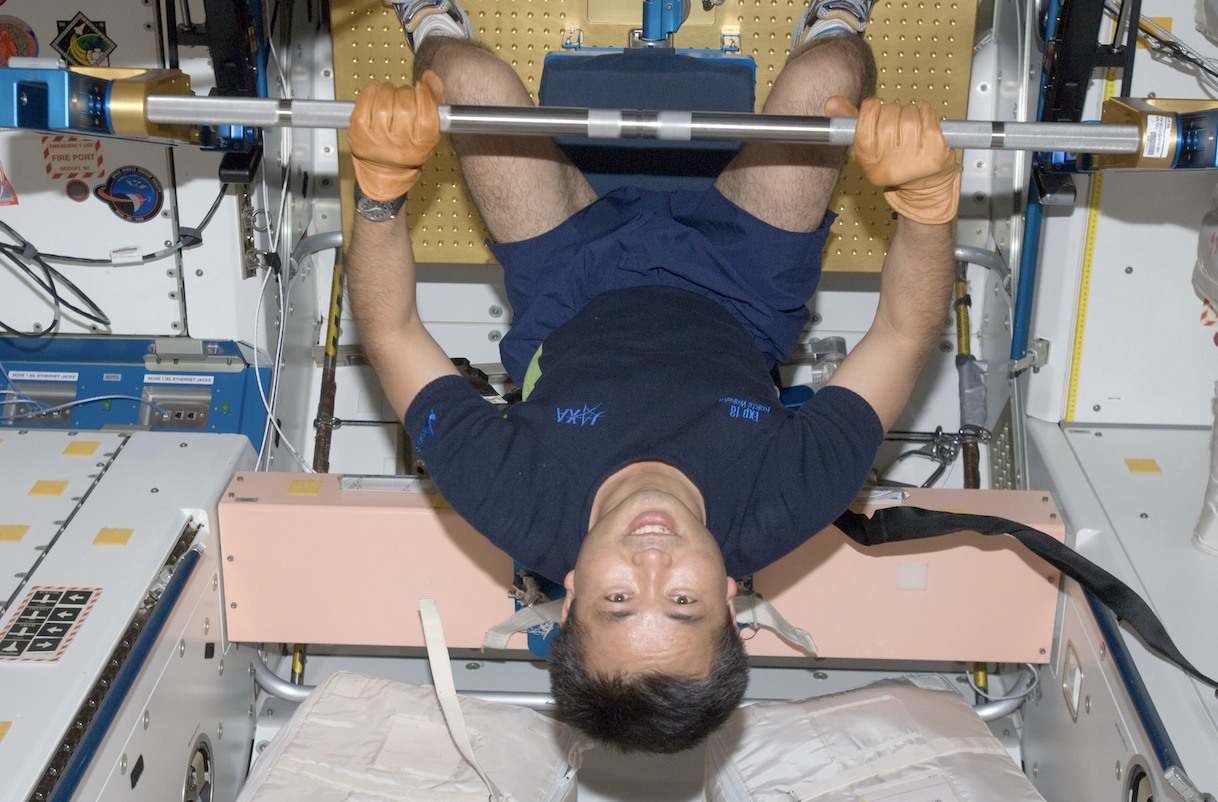
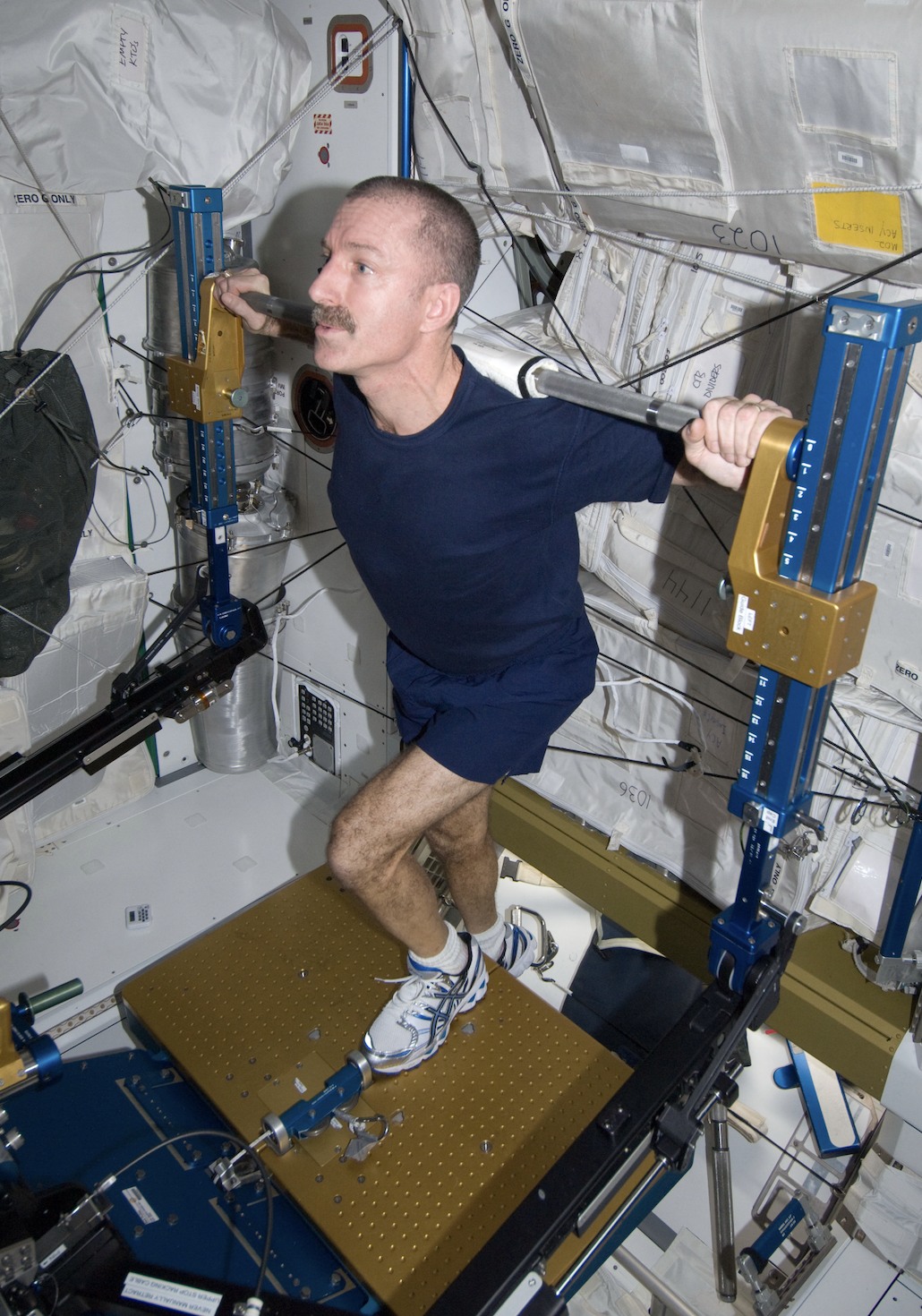
Running and cycling in orbit require specialized equipment because simply standing on a floor no longer loads the body as it does on Earth. Resistance devices provide another way to work muscles when gravity is not supplying that load.
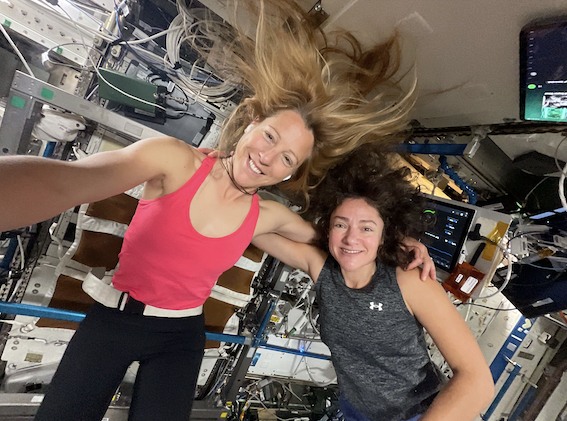
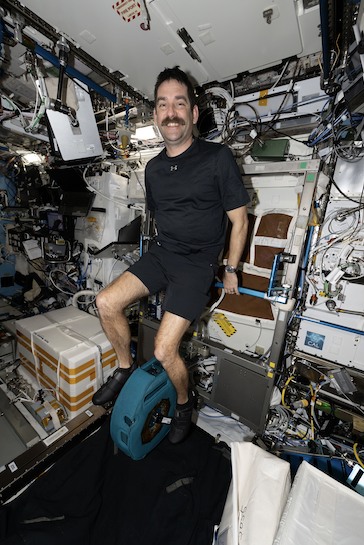
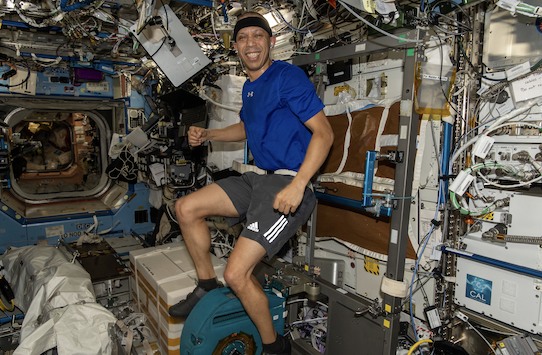
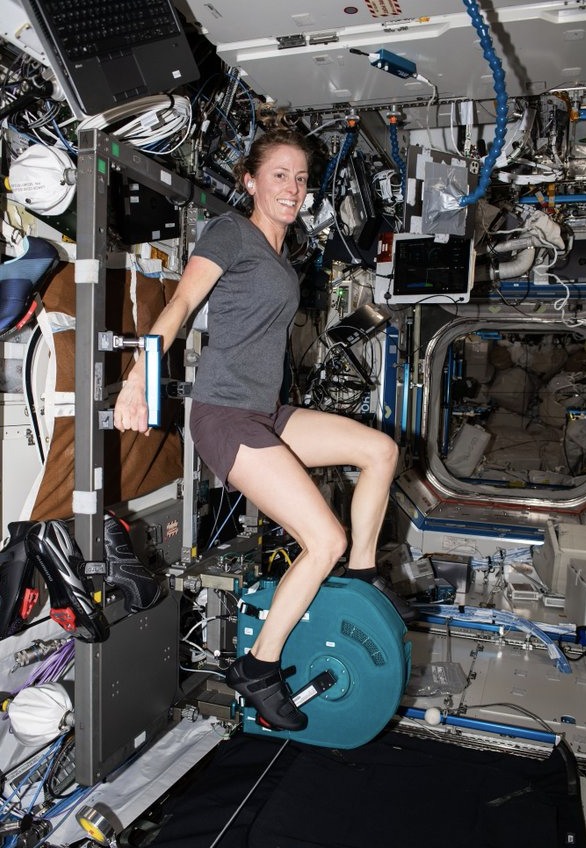
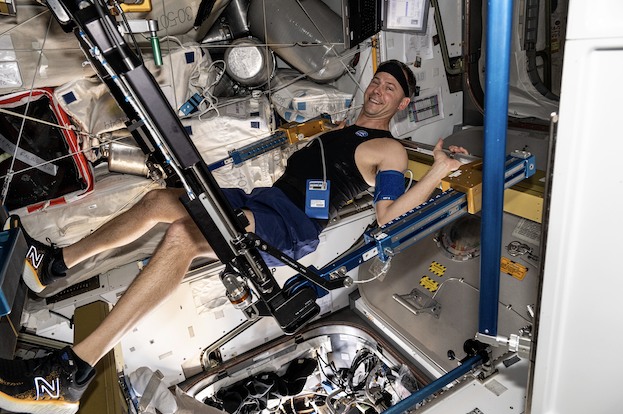
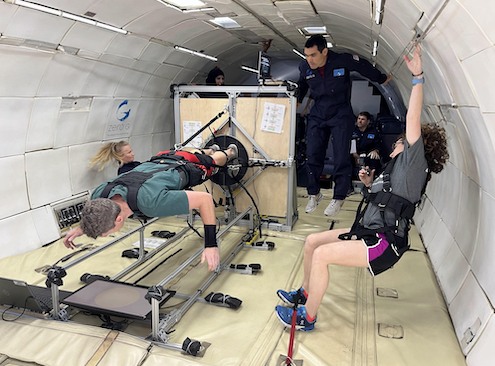
The study’s source photographs show several generations of ISS exercise routines: astronauts on treadmills, exercise cycles and the Advanced Resistive Exercise Device. They illustrate the equipment and daily work involved; the release does not identify everyone pictured as one of the 13 study participants.
That distinction prevents an easy visual mistake. A photograph of an astronaut exercising is relevant context, but it is not, by itself, proof that the person took part in this particular experiment or produced a particular measurement.
Bringing Mars into an Earth laboratory
After the astronauts returned, researchers used a tilt test to examine how their cardiovascular systems handled a weaker gravitational challenge than standing upright on Earth. Tilting the body about 22 degrees up from horizontal approximated the component of gravitational pull expected on Mars, where surface gravity is about 38 percent of Earth’s.
The observed responses were similar to the astronauts’ preflight responses to being upright on Earth. That is encouraging for the prospect of moving and working after arrival on another world, when a crew would need to leave a vehicle and begin operating in gravity again.
But a tilt table is a model. It cannot reproduce every feature of walking on Mars, months of travel to get there, a spacesuit, or the physical and psychological demands of an actual landing. The test answers a defined cardiovascular question, not the entire question of mission readiness.
Thirteen people, not a randomized proof
James Thomas of Northwestern worked with collaborators including Benjamin Levine of UT Southwestern and Michael Bungo of UTHealth Houston. Astronauts performed ultrasound examinations on one another, with help from specialists on Earth, allowing the team to follow changes during flight rather than relying only on before-and-after snapshots.
The sample was small and involved highly trained, medically selected people. There was no randomized comparison in which one group completed long missions without the exercise program. The findings therefore support the current approach without proving that exercise alone caused every favorable change.
The research also does not resolve other hazards of deep-space travel, including radiation exposure or all aspects of bone and muscle loss. Its significance is narrower and still substantial: the heart appears capable of adapting while astronauts keep working it, rather than inevitably losing function simply because they are weightless.
The university’s account was published on October 19, following a September paper in Circulation. It adds useful evidence to the planning for longer journeys, while leaving a clear distinction between a promising physiological result and a guarantee of a safe Mars mission.