Spotify reaches 306 million paying subscribers. Its next bet goes beyond music.
Revenue reached €5 billion as the company expanded books, creator tools and ways to shape recommendations.
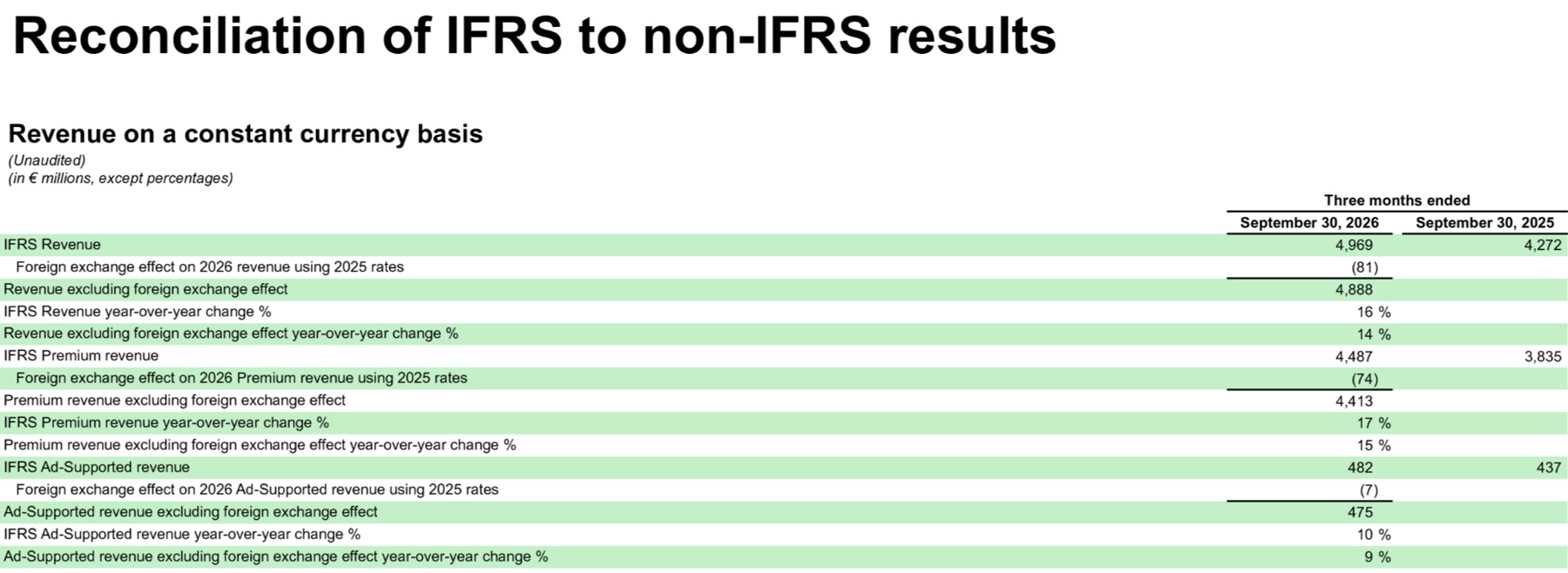
Spotify reached 306 million paying subscribers in the third quarter, up nine percent from a year earlier, while monthly active users climbed 11 percent to 788 million. Revenue increased 16 percent to €5 billion.
Those are the core numbers in the company’s October 22 earnings announcement. The broader strategy is to give people more reasons to stay inside Spotify: music, podcasts, audiobooks and closer connections with creators, alongside more control over recommendations.
Growth is not just a bigger audience
Spotify reported a 33 percent gross margin, an improvement of 136 basis points from a year earlier, and operating income of €672 million. The company said both measures came in ahead of its expectations.
Gross margin is the share of revenue left after the costs included in that measure; operating income is a different figure after operating expenses. Neither should be confused with subscriber growth or with every euro of revenue becoming profit.
The 306 million premium figure is also not interchangeable with the 788 million monthly audience. The latter is a broader usage measure, not a second count of paying accounts to add on top of the first. Keeping the definitions straight is essential when a streaming company reports several large numbers together.
Recommendations become something listeners can edit
Taste Profile, a beta feature for U.S. Premium subscribers aged 18 and older, lets people see and adjust how Spotify understands their preferences across music, podcasts and audiobooks.
That changes the pitch from simply accepting an algorithm’s choices to shaping the information behind them. It does not establish that everyone worldwide has the feature, or that every change will produce a recommendation a listener likes.
Playlist Notes adds another layer of context, allowing people to explain their selections inside playlists and hear more about picks from editors. Managed accounts are also expanding to families on Free or Premium plans in selected markets, with parents or guardians retaining control over the listening environment for younger users.


The next growth story includes books and creators
Spotify plans to expand audiobook access from 22 markets to more than 180 by the end of 2026. That is a rollout target, not a statement that all those markets already had identical access on the earnings-announcement day.
Creator memberships are rolling out in 34 markets, giving eligible creators a way to offer exclusive material and experiences to fans. Separately, the Spotify Partner Program is expanding to more than 35 additional markets this fall. The numbers describe different products and should not be combined into a single list of guaranteed benefits for every creator.
The company also announced Fresh Finds Forward, intended to support approximately 10,000 emerging independent artists each year. That annual ambition is not a tally of artists who have already received every form of support.
Can an AI agent replace the listening habit?
Co-CEO Gustav Söderström framed entertainment as different from chores: people may want an agent to handle routine tasks, but the pleasure of listening is not eliminated by a summary of a song.
That is the company’s strategic argument, not proof that AI will automatically increase Spotify’s revenue. It assumes that time saved elsewhere becomes time spent with entertainment, and that Spotify can capture enough of it.
The results show a business growing in audience and revenue while extending its product range. The next test is whether those additional books, tools and creator relationships keep listeners engaged and support profitable growth—not simply whether another large feature list can be announced next quarter.