Hair shedding and hair loss are not always the same thing
Some daily shedding is normal. A change in pattern, persistent thinning or uncertainty deserves a closer look.
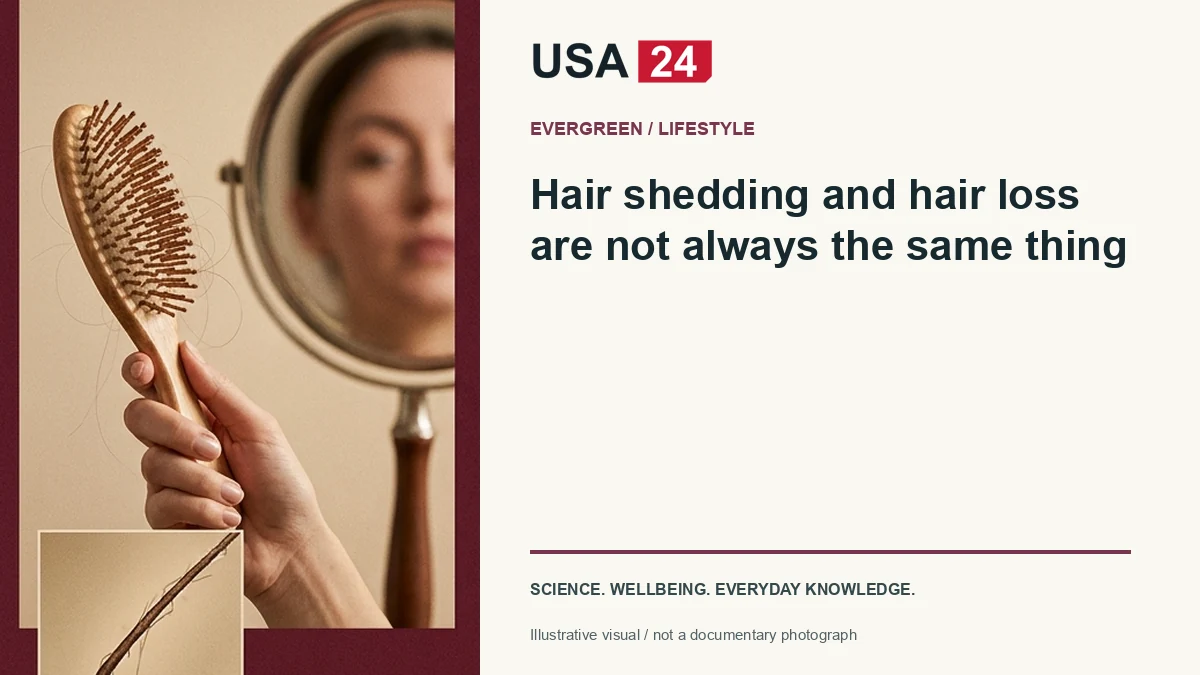
Finding hairs in a brush can be alarming, especially when a shampoo advertisement offers an instant explanation. But shedding and hair loss are not interchangeable terms, and the difference can matter when choosing what to do next.
Some shedding is part of the normal cycle
The American Academy of Dermatology says shedding about 50–100 hairs a day is normal. That range is context, not a requirement to count every strand or diagnose yourself from a single shower.
Excessive shedding can follow stressful events such as illness, surgery or childbirth. It may become noticeable months after the event, which helps explain why the apparent timing can be confusing.
Loss can have a different cause
The AAD distinguishes excessive shedding from conditions in which hair stops growing. People can also experience both at the same time. A clinician may need to assess the scalp and history to understand what is happening.
That is why a one-product explanation is unreliable. Similar-looking changes can have different causes, and a cosmetic product cannot be assumed to address every reason for reduced density or altered growth.
Avoid turning uncertainty into a supplement habit
The academy notes that shedding after a temporary stressor often improves as the body readjusts. That does not mean every person should simply wait indefinitely, or that every patch of thinning is temporary.
If the change is persistent, patchy, rapid or worrying, consult a dermatologist. Do not stop prescribed medicine on your own or assume a supplement will correct an unconfirmed deficiency. This is general education, not a diagnosis or a regrowth guarantee.